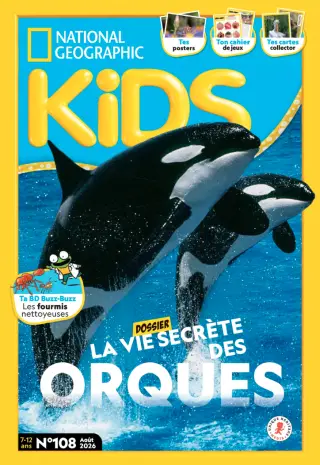
National Geographic Kids is the children’s edition of the famous American brand, adapted in France for readers ages 7 to 12. Each month, the editorial team takes the source material that has made the adult edition famous—the work of wildlife photographers, archaeologists, and biologists—and translates it into language that children understand and love. The result is a blend of science magazine and adventure journal, featuring large-format images and a tone that encourages children to ask questions rather than simply recite facts.
What your child gets every month
The table of contents combines a major feature on animals with a series of short articles, designed to alternate between leisurely reading and quick glances.
- Feature Story: An in-depth look at animals, illustrated with photos by the brand’s photographers—perfect for preparing a class presentation.
- “In the Wild” and “SOS Animals”: documentaries on endangered species and the work of animal caretakers—without sugarcoating the reality but without painting a bleak picture either.
- Unbelievable but true: a collection of scientific trivia that kids remember and share during recess.
- The Explorer Comic: Every other month, an illustrated story about Cousteau, Saint-Exupéry, or Alexandra David-Néel, drawn by established artists.
- Games, crafts, and posters: everything you need to extend the reading experience through hands-on activities, with collectible worksheets every two months.
A title that appeals to curious young people
The magazine is aimed at a specific age group: children who read on their own but still need striking images to engage with a topic. The texts remain accessible, the captions do most of the educational work, and the short sections help prevent younger readers who are less confident from becoming discouraged. It strikes a good balance between pure comics and educational documentaries.
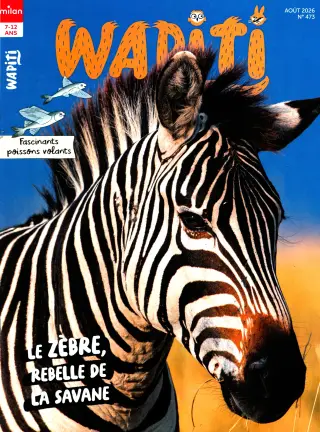
Another hallmark of the magazine is its commitment to the environment, which is evident without being preachy. The “Your Eco News” and “Explorer Careers” sections highlight concrete actions and real-life stories, inspiring readers to take action rather than feel guilty. Many parents appreciate this approach, which sparks conversations at home about the environment and careers in nature. The magazine is perfect for both animal lovers and children who need a little encouragement to get into reading. Families looking to expand their collection can also check out Wapiti, another leading nature magazine for this age group.
Subscribe from France or abroad
Subscriptions to National Geographic Kids are available through UNI-Presse, and shipping costs are included in the listed price. We deliver to 190 countries, allowing expat families to stay connected to French-language reading material. If you have any questions about delivery times or renewal, our team of advisors will respond directly to you.
Questions parents ask themselves
At what age should children start reading the magazine?
This book is intended for children ages 7–12. A proficient 7- or 8-year-old reader can read it on their own, while younger children will mainly enjoy the pictures and stories when reading with an adult. For children over 12, the content remains enjoyable, but it becomes less engaging.
How often is it published?
National Geographic Kids is published monthly. Every two months, the issue includes a full-length explorer comic and a set of collectible cards, making it a much-anticipated feature and helping to build the collection throughout the year.
Are there any special issues?
Yes.The special issues feature hundreds of fun facts and nature-related news stories, always illustrated with the magazine’s own photos. They’re a great addition to the subscription for kids who can’t wait for the next issue to come out.
Is the content truly scientific?
The resources are based on the work of the brand’s photographers and scientists. The information is verified and then simplified for the target age group without being distorted, making it a reliable tool for sparking curiosity or kicking off a presentation.